
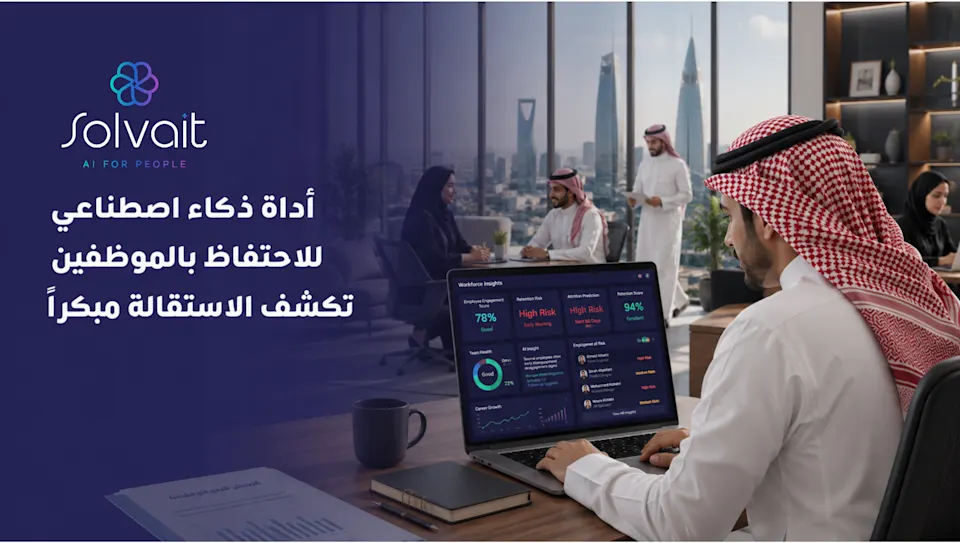
Know Who Will Quit Before They Hand In Their Notice
An employee retention AI tool is a system that reads everyday HR data, things like engagement scores, manager one to one gaps, and leave patterns, and turns it into a flight risk score for each person before they actually decide to leave. The premise is simple. Most resignations don't arrive out of nowhere. They build from small signals over weeks, and nobody gathers those signals in one place in time to read them. That gap is exactly where AI earns its place.
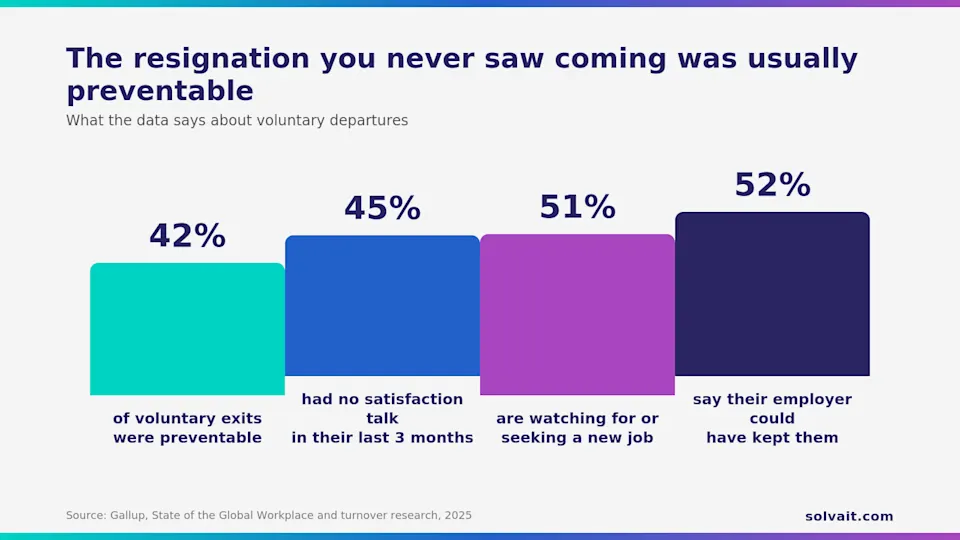
Here's the number every HR leader should sit with: Gallup found that 42% of voluntary turnover is preventable, meaning the employee themselves believes the organization or their manager could have done something to keep them (Gallup, 2025). The problem isn't that people leave. It's that we find out they wanted to leave once it's too late to do anything about it.
This piece covers three practical questions: why you don't see resignations coming, how AI flags flight risk early, and how you turn those signals into a retention strategy that fits the talent market across Saudi Arabia and the wider GCC.
Why don't you see resignations coming?
The first reason is that the signals are scattered. Engagement lives in one system, overtime in another, last promotion date in a third, and the manager's gut feeling in a busy person's memory. Nobody sits down to connect those threads for every employee every week. There simply isn't time for that in an HR team running hundreds of people.
The second reason is that humans are bad at spotting slow patterns. The employee whose attendance at team meetings tapered off, whose initiative dropped, who started burning through accrued leave, never raises one obvious red flag. Each small change on its own looks normal. Only the combination carries the signal, and the combination is what we miss.
Worse, the conversation that might have surfaced the problem often never happens. Gallup found that 45% of people who quit said no manager or company leader had spoken with them about their job satisfaction or future in their final three months (Gallup, 2025). In nearly half of resignations, nobody even asked.
In the Gulf, the cost shows up faster. Gallup's study of the Saudi labor market found that 24% of employees are actively looking for a new job, and the share who are either searching or open to a move jumped from 30% to 48% in three years (Gallup, 2025). With Vision 2030 projects competing hard for technical skills, market analysts expect attrition in tech and data roles across the GCC to reach 25% to 35% through 2026 (vBeyond GCC Labor Market Report, 2026).
The direct result of all this is that you learn about a resignation at the exit interview, the worst possible moment. The decision is made, the counter offer is signed somewhere else, and all that's left is managing the gap. And the gap isn't cheap. Gallup and SHRM estimates put the cost of replacing a leader at up to 200% of their annual salary once you add hiring, onboarding, and lost productivity (Gallup, 2025).
How does AI detect flight risk early?
The core idea is that an attrition model learns from history. You train it on records of employees who left voluntarily alongside those who stayed, and it learns which combinations of factors usually preceded a departure. It then runs on your current workforce and outputs a probability for each person, which HR platforms usually present as risk tiers, low, medium, or high, so non technical users can act on them.
What does the model actually read? A mix of factors shown to predict departures: engagement scores, sustained overtime, time since last promotion, pay position against market, the spacing of an employee's one to ones, and leave patterns. Published research found that features like overtime, job level, and job satisfaction rank among the strongest attrition predictors when analyzed with machine learning (Scientific Reports, Nature, 2026).
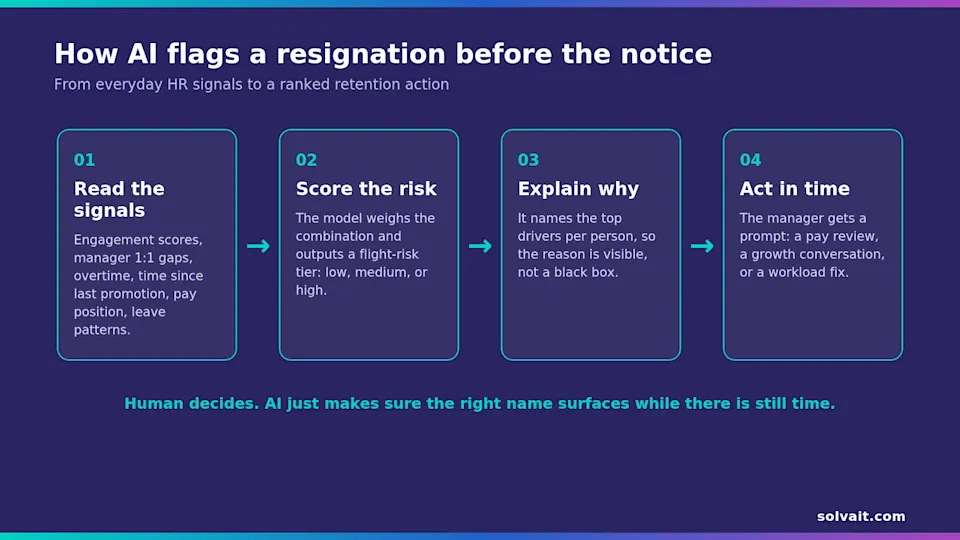
And the accuracy isn't hypothetical anymore. In a peer reviewed 2026 study, an XGBoost based model reached over 97% accuracy predicting attrition on benchmark HR datasets, with explainability built in to surface the reasons behind each prediction (MDPI Computers, 2026). That word, explainability, is the one that matters. A good model doesn't just say "this person is high risk." It names why: two years without a promotion, pay below market, falling engagement. That's what makes the score something you can act on rather than just worry about.
Here's the part people get wrong. A risk score is not a judgment on the employee, and it's not a decision to let them go. It's an early warning for the manager to start a conversation. The model decides nothing. It just makes sure the right name lands on the manager's desk while there's still time to act. The decision stays fully human.
And because honesty builds trust, the limits deserve saying out loud. Model accuracy degrades over time as the workforce and market shift, so it needs scheduled retraining and continuous bias monitoring. This isn't a launch and forget tool. It's an operating commitment. Prediction quality also depends entirely on clean data; a model built on patchy attendance records or biased performance reviews will just reproduce those flaws.
How do you turn the insight into a retention strategy that works?
Insight alone keeps nobody. The difference between an organization that knows who will quit and one that actually retains people is what it does with the number. Here's a practical four step frame.
First, rank, don't just alert. A list of a hundred "high risk" employees is useless. What you need is a ranking that combines resignation probability with the value of the person to the business, so your team focuses on the ten whose loss would genuinely hurt. AI gives you that ranking. Your job is to use it.
Second, treat the cause, not the symptom. Because a good model explains its predictions, you can match the intervention to the reason. The employee driven by pay needs a compensation review, not a culture chat. The one who's stopped growing needs a development path, not a raise. That matching is what lifts your success rate. And remember, Gallup found that 52% of leavers believe their employer could have kept them; the reason is usually there and usually fixable (Gallup, 2025).
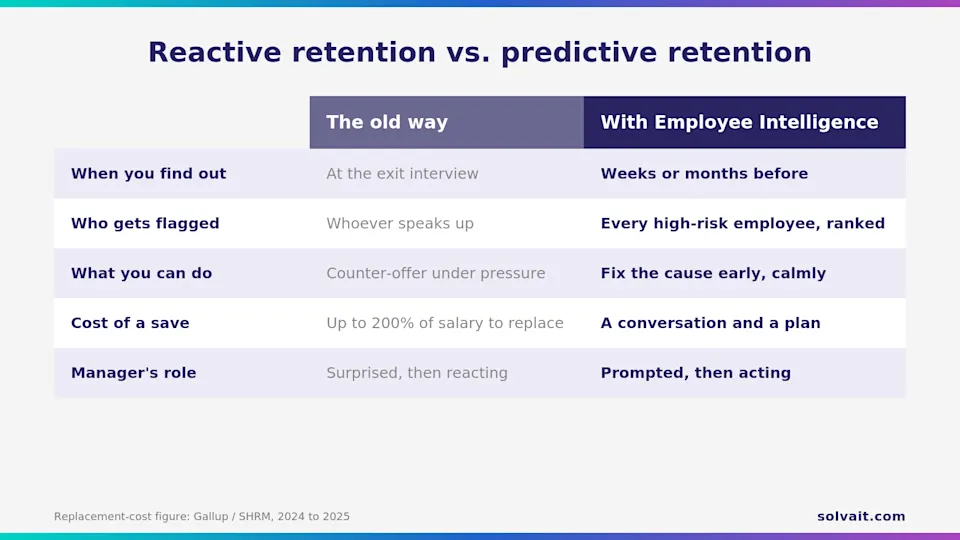
Third, equip the manager, not just HR. Retention happens in the daily conversation between a manager and their report, not in a dashboard. So the alert has to reach the line manager with a clear suggested next step attached. The economics here are decisive: a proactive conversation costs an hour of a manager's time, while replacing the person can cost double their salary. The gap between those two figures is the ROI of predictive retention.
Fourth, close the loop and measure. Record whether the intervention worked, and feed the outcome back into the model. With each cycle, the system learns which interventions succeed against which kinds of risk in your specific context. That's how prediction stops being a monthly report and becomes an organizational learning engine.
Where Solvait Wise fits
This is exactly what Solvait Wise, our AI performance and talent platform, was built for. Its Employee Intelligence capability reads performance and engagement signals across work cycles, ranks people by flight risk, surfaces the likely reasons for each case, and puts the alert in front of the right manager with a suggested next step. Just as important, Wise works alongside the HR system you already run, so it strengthens your analytics rather than forcing you to rip and replace. For organizations running performance and payroll on one platform, that ties into Solvait HCM, built on Microsoft Dynamics 365 and ready for Saudi WPS and GOSI requirements.
If you want to see what flight risk looks like in your organization before it becomes a resignation letter, book a demo.
FAQ
What is an employee retention AI tool?
It's a system that analyzes HR data such as engagement, performance, and work patterns, and produces a resignation probability score for each employee. The goal is to flag flight risk early so a manager can step in with a conversation or a plan before the person makes a final decision.
How accurate is AI attrition prediction?
Accuracy varies with data quality and the model, but recent peer reviewed studies have reported over 97% accuracy on benchmark datasets. Those are lab figures, though; real world performance depends on how clean your organization's data is and whether the model is retrained regularly.
Does AI decide who gets let go?
No. A risk score is a prompt for the manager to start a conversation, not a decision to terminate. The decision stays entirely human. The proper use of the tool is to keep the employee, not to remove them.
Does this approach suit companies in Saudi Arabia and the GCC?
Yes, and the need is greater in a market with intense competition for talent. With a large share of employees seeking new roles and replacement costs rising, early prediction gives Gulf organizations time to act instead of react.
What do I need to start using an AI powered retention tool?
You need clean, structured HR data on performance, engagement, and tenure, a platform that turns predictions into alerts managers can use, and a clear process for intervening and measuring results. Platforms like Solvait Wise bring these pieces together in one place.
References
Gallup: State of the Global Workplace: 2025 Report, 2025 (preventable turnover, missing satisfaction conversation, replacement cost)
Gallup: Saudis Are Seeking New Jobs. Can Companies Retain Them?, 2025 (Saudi labor market data)
Nature, Scientific Reports: Integrating machine learning and explainable AI for employee attrition prediction, 2026 (top attrition predictors)
MDPI, Computers:Employee Attrition Prediction: An Explanatory and Statistically Robust Ensemble Learning Model, 2026 (model accuracy)
vBeyond: Strategic Horizon 2026: The GCC Labor Market Transformation Report, 2026 (GCC attrition outlook)
Ready to see Solvait in action?
Book a personalized demo and see how Solvait's AI-powered HR platform can transform the way your team works.
Tags
Related Posts

Sorting CVs using Agentic AI
How Agentic AI cuts hours of work to seconds, and how to make sure you don't lose the right candidate during fast screening in Saudi Arabia?
Jun 24, 2026
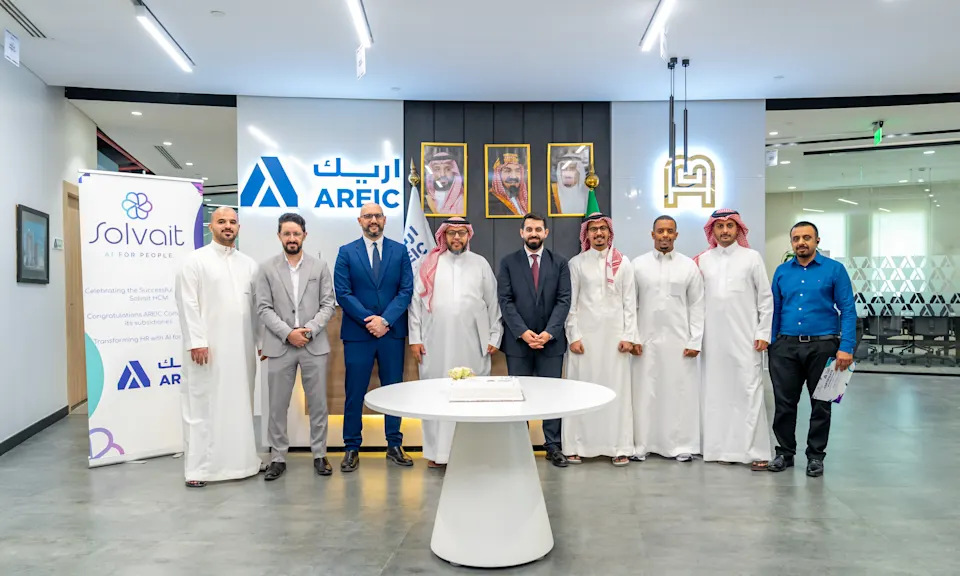
Solvait HCM Goes Live Across Almutlaq Group
Solvait HCM is now live at Almutlaq Real Estate (AREIC), Qantara Development, and Almutlaq Furniture. How one group unified HR on a single platform.
Jun 28, 2026

What Drives Employee Turnover in Saudi Arabia?
discover the factors that prompt high performing talent to consider leaving, and find out how predictive AI can identify the risk of departure early on.
Jun 17, 2026