
Why Your Best Saudi Employees Quit Quietly
Your best employee won't tell you they're thinking of leaving. They'll keep doing good work, showing up to meetings, hitting deadlines. And in the background they've already refreshed their LinkedIn, replied to a message from a competitor, and worked out what their end of service benefit would be. By the time the resignation lands on your desk, the contest was lost weeks ago.
This isn't a loyalty problem. It's a visibility problem. Most HR teams in Saudi Arabia don't discover an employee's intent to leave until the exit interview, which is far too late to do anything about it. Artificial Intelligence in recruitment is an approach that uses AI Agents to read performance, engagement, and career trajectory signals, then alerts a manager to flight risk before the employee makes a final decision. This article covers three things: why your best people actually leave, which signals come before the resignation, and how AI turns retention from a reaction into something you do on purpose.
First: why your best people are the ones who go
There's a comfortable myth that a good employee only leaves when a rival waves a bigger number at them. The truth is more uncomfortable. Your strongest people are the first to notice when their work stops growing, the first to get the recruiter calls, and the least willing to sit in a role that no longer teaches them anything.
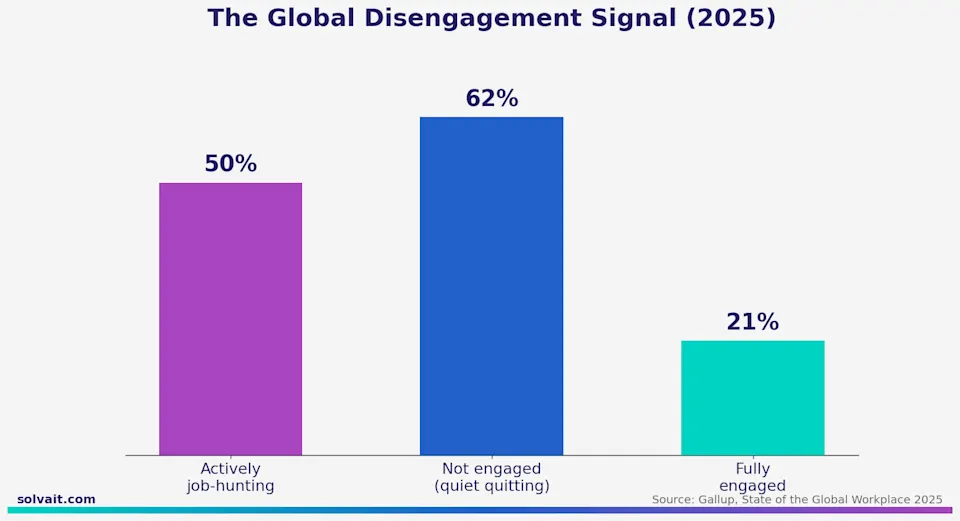
The global numbers say the problem is wider than most leaders assume. Gallup's State of the Global Workplace 2025 found that roughly half of employees worldwide are actively job hunting or open to a move. In the same year, global engagement slid to just 21%, one of the lowest readings since the pandemic, at an estimated cost of $438 billion in lost productivity a year.
A disengaged employee doesn't shout. They go quiet. They stop floating ideas in meetings and settle for the minimum the role demands. Gallup calls this "quiet quitting," and it's usually the stage that comes before the actual resignation.
In the Saudi market the pressure is sharper. Vision 2030 has created enormous demand for qualified talent, and unemployment among Saudi nationals fell to record lows through 2025, which means your good employee has more options than ever. A 2025 study found that Saudi organizations with collaborative, transparent cultures and strong recognition programs had 37% lower turnover than those with hierarchical, closed cultures.
So the cause is rarely pay on its own. It's a mix of stalled growth, a weak relationship with the direct manager, and the sense that effort goes unseen. What these have in common is that they all leave a measurable trace long before anyone drafts a resignation letter.
Second: the signals that show up weeks before the resignation
When we review the case of an employee who left, the signals were usually there the whole time. The problem is that nobody was collecting them in one place.
Someone heading for the door changes their behavior gradually. Their involvement in new projects drops off. Their engagement survey responses get thinner or turn negative. Their leave usage either falls in an unusual way or suddenly spikes. They stop volunteering for the extra work they used to grab. Any one of these means nothing on its own. Together, they tell a story.
This is the real bind for an HR director. The data exists, but it's scattered. Performance lives in one system, attendance and leave in another, review scores in a third. Nobody has time to stitch those threads together by hand across hundreds of employees every week. So the signals go unread until they harden into a resignation.
The price of missing those signals isn't symbolic. SHRM estimates that replacing a single employee costs between 50% and 200% of their annual salary once recruiting, training, and lost productivity are counted. Gallup puts the replacement of a leader or manager at around 200% of salary. Losing one key person isn't a line item in the HR budget. It's a cash leak.
Here's the part worth being clear about: this is a case for paying attention, not for surveillance. Surveillance hunts for mistakes. Attention notices when a good person needs a conversation before it's too late to have one.
Third: how AI turns retention from reaction into prevention
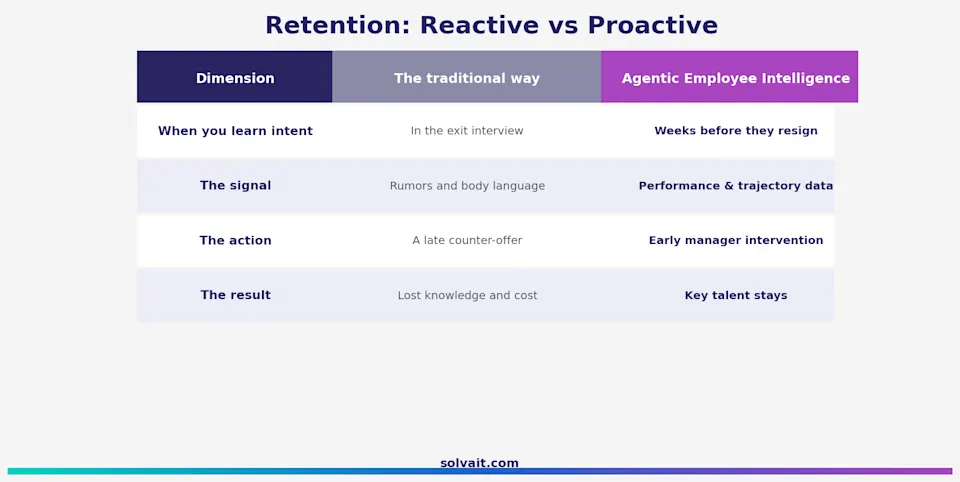
The traditional way to manage retention is reactive. A manager waits until the resignation arrives, then scrambles for a counter offer that, more often than not, fails. The proactive approach flips the question. Instead of asking "why did they leave?" you ask "who is at risk, and what do I do this week?"
This is where Agentic AI comes in. The AI doesn't replace a manager's judgment. It reads what's hard for humans to read by hand: patterns spread across multiple systems and hundreds of people. The agent connects performance, engagement, and trajectory data, flags who is showing flight risk indicators, and proposes a concrete early intervention to the manager. A development conversation, a redistribution of work, or a clear path to promotion.
The crucial part is that the decision stays human. The AI supports the call; it doesn't make it. That's what makes the approach workable, both ethically and practically, in a Saudi workplace where the relationship between a manager and their team is the heart of any decision about people.
And the payoff isn't theoretical. Recent reporting indicates that organizations using AI to predict and prevent turnover have cut attrition rates by up to 50%. Even a modest improvement in keeping your core people means hundreds of thousands of riyals saved a year, plus institutional knowledge you can't buy back.
Dimension | The traditional way | Agentic Employee Intelligence |
When you learn intent | In the exit interview | Weeks before they resign |
Source of the signal | Rumors and body language | Performance, engagement, trajectory data |
The action | A late counter offer | Early manager intervention |
The manager's role | Surprised, reacting | Alerted, acting with confidence |
The result | Lost knowledge and cost | Key talent stays |
Where Solvait Wise fits
Solvait Wise is a standalone, AI driven performance and talent platform built to sit on top of your existing HR system rather than replace it. Its Employee Intelligence capability does exactly this job: it pulls performance, engagement, and career trajectory signals into one place and turns them into a per employee flight risk indicator with a clear recommendation for the manager. It's decision support, not an automated judgment made on a person's behalf.
On the delivery side, if your core HR system runs on Solvait HCM built on Microsoft Dynamics 365, performance, payroll, and attendance data flow into Wise without duplicate manual entry. You can see how this plays out in real deployments in our customer stories.
If you want to see what a flight risk indicator looks like on your own organization's data, book a demo.
FAQ
What are the main causes of employee turnover in Saudi Arabia?
The biggest drivers are stalled growth and promotion opportunities, a weak relationship with the direct manager, and the feeling that effort goes unrecognized, compounded by rising competition for talent under Vision 2030. Pay is a factor, but it's rarely the only or first reason people leave.
How does AI predict who will resign?
AI analyzes patterns in performance, engagement, leave usage, and career trajectory data over time, then compares them against indicators that preceded real departures. The output is a risk indicator that helps a manager pay attention early. The final decision always stays human.
How much does it cost to replace an employee?
According to SHRM estimates, replacing an employee costs between 50% and 200% of their annual salary once recruiting, training, lost productivity, and institutional knowledge are counted. The cost runs higher for leadership and technical roles than for entry level ones.
Does Employee Intelligence replace the manager?
No. The AI surfaces the signals and suggests an intervention, but the conversation with the employee and the final decision stay with the human manager. The approach is built on decision support, not automation.
Do I need to replace my current HR system to use this?
No. Solvait Wise is designed to sit on top of your existing system and add an intelligence layer, and it integrates more smoothly when your core system is built on Microsoft Dynamics 365.
References
Gallup: State of the Global Workplace 2025, 2025 (share actively job hunting, global engagement, lost productivity cost)
Gallup: Saudis Are Seeking New Jobs. Can Companies Retain Them?, 2025 (competition for talent in Saudi Arabia and engagement)
SHRM: The Myth of Replaceability, 2025 (replacement cost 50% to 200% of salary)
Journal of Cultural Analysis and Social Change: The Impact of Organizational Culture on Employee Turnover in Saudi Organizations, 2025 (37% lower turnover with transparent culture)
Trading Economics / GASTAT: Saudi Arabia Unemployment Rate, 2025 (record low unemployment among Saudi nationals)
Ready to see Solvait in action?
Book a personalized demo and see how Solvait's AI-powered HR platform can transform the way your team works.
Tags
Related Posts
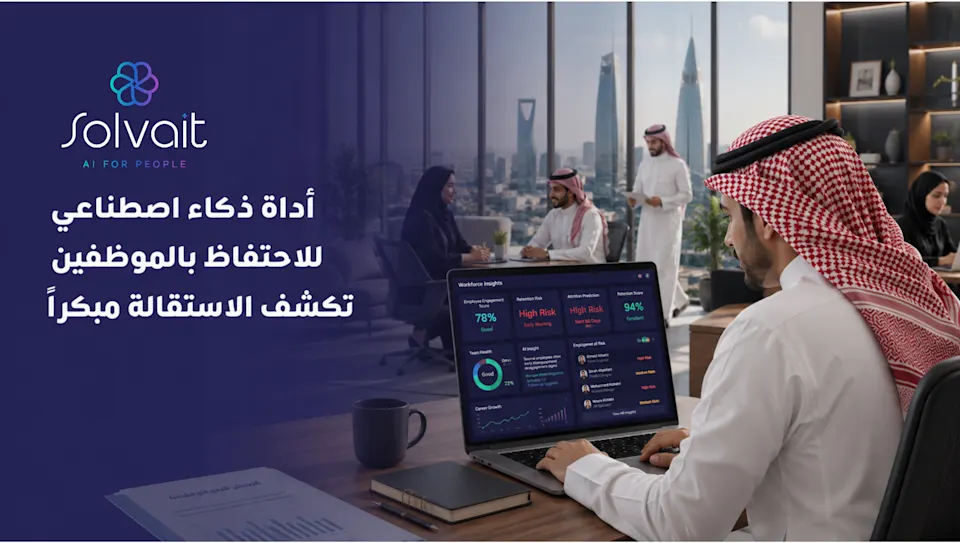
Employee Retention AI Tool
How an employee retention AI tool flags flight risk before the notice, and how GCC HR teams turn those signals into a retention strategy that works.
Jun 21, 2026
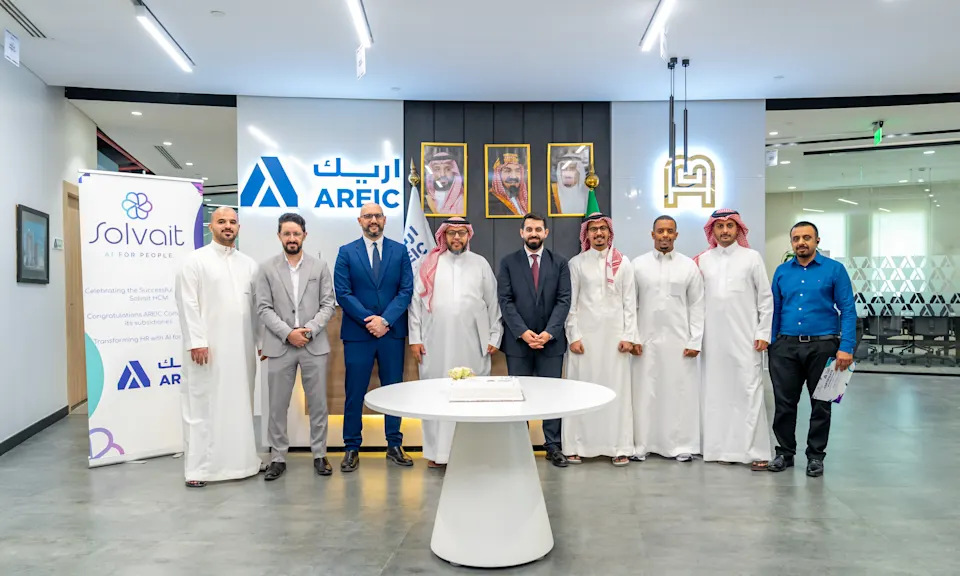
Solvait HCM Goes Live Across Almutlaq Group
Solvait HCM is now live at Almutlaq Real Estate (AREIC), Qantara Development, and Almutlaq Furniture. How one group unified HR on a single platform.
Jun 28, 2026
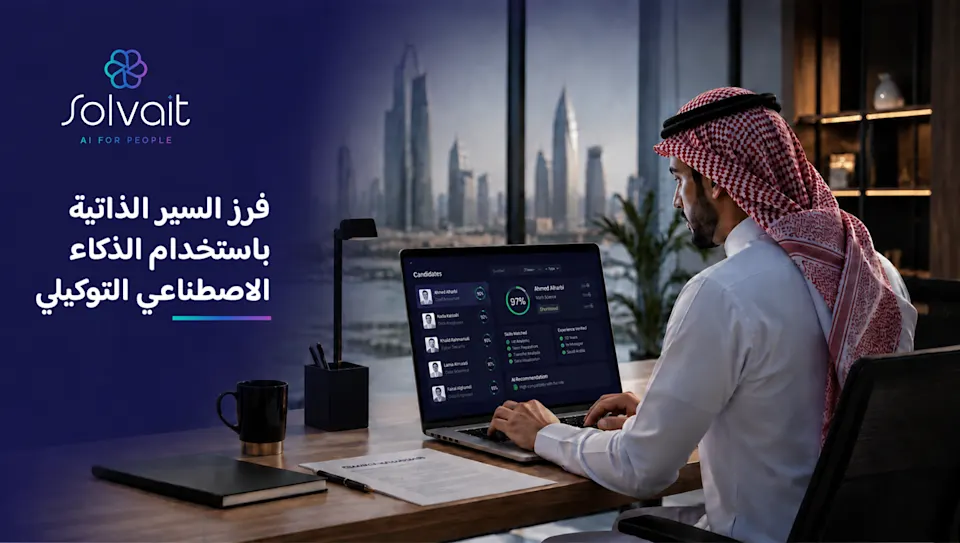
Sorting CVs using Agentic AI
How Agentic AI cuts hours of work to seconds, and how to make sure you don't lose the right candidate during fast screening in Saudi Arabia?
Jun 24, 2026