
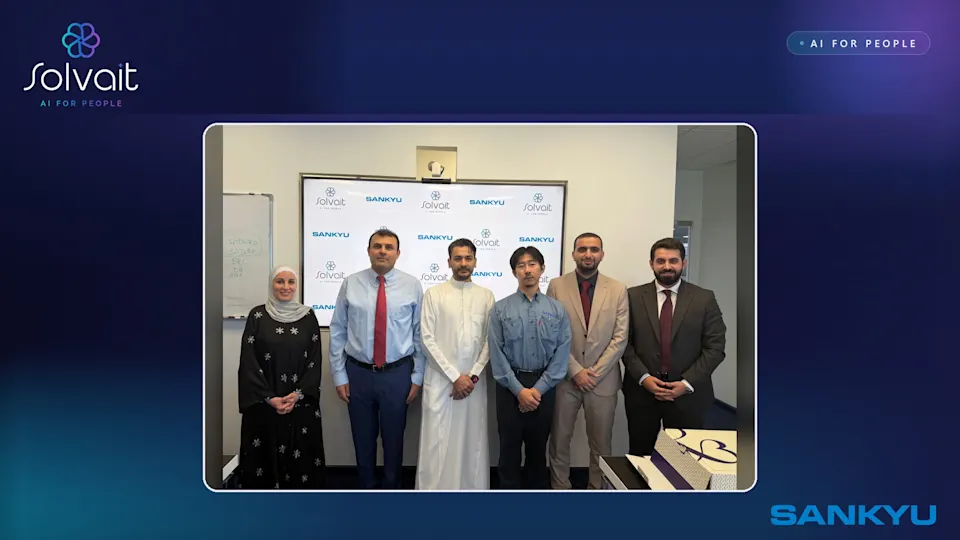
AI Recruitment at Sankyu: Solvait Attract Goes Live
Solvait has gone live with SANKYU on Attract, Solvait's AI recruitment platform. This is an expansion of a partnership that already runs deep. Sankyu has managed its people on Solvait's HR platform for more than six years, and it is now bringing that same system into how it hires.
Attract is an AI recruitment platform, an applicant tracking system that writes job descriptions and then parses, scores, and ranks CVs by how well each person fits the role. For an industrial employer that can receive hundreds of applications for a single technical vacancy, that changes the recruiter's day. Less time sorting a pile, more time talking to the right people.
Below: what went live, how the AI works in practice, and why a company chooses to expand with a system instead of replacing it.
Key takeaways
SANKYU , a Japanese logistics and plant engineering group with a strong Saudi presence, is now live on
Solvait Attract, an AI recruitment platform.
This follows more than six years of SANKYU running its HR on Solvait's platform, so the move is an expansion, not a first date.
Attract uses AI to parse, score, and rank CVs by real fit, cutting first round screening from days to minutes.
AI speeds up hiring, but it does not replace judgment. The shortlist is faster; the decision stays human.
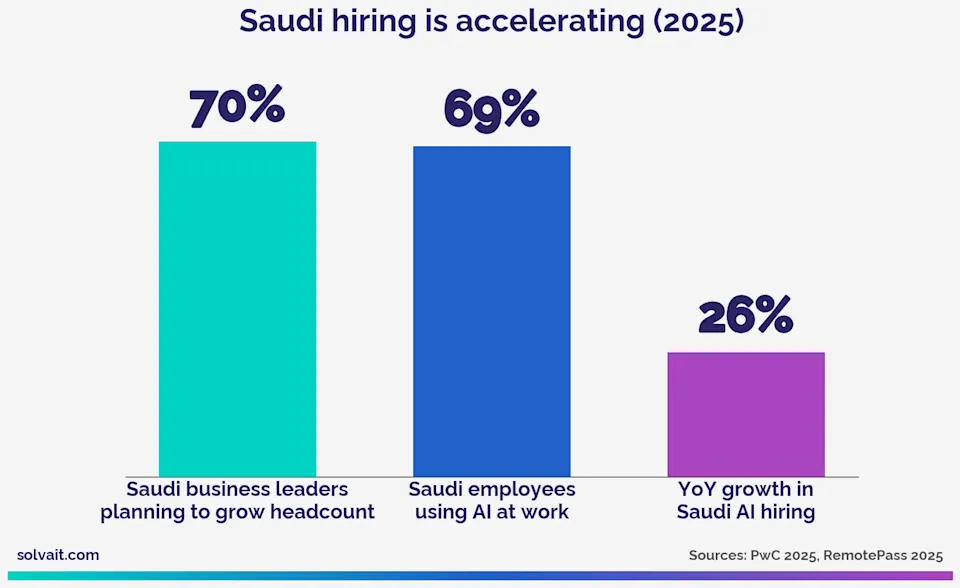
Saudi hiring demand is high (70% of Saudi leaders plan to grow headcount, per PwC 2025), which makes screening speed a real bottleneck.
What did Solvait and Sankyu just launch?
SANKYU is now using Solvait Attract to run recruitment. The rollout is live, which means job descriptions, CV screening, candidate ranking, and stage based communication all happen inside one AI assisted system rather than across inboxes and spreadsheets.
A quick word on who SANKYU is, because the scale matters. SANKYU started in Japan in 1918, and its name comes from the English words "thank you." Its founding principle is simple: value people. Today it is a group of roughly 29,000 employees worldwide, blending logistics with plant engineering and on site industrial services. In Saudi Arabia, SANKYU has operated since 2008, with teams in Jeddah, Jubail, Al Khobar, Yanbu, and Rabigh, serving the Kingdom's largest petrochemical names and investing in local talent in line with Vision 2030.
Hiring at that scale is not a stack of CVs. It is hundreds of applicants for one technical role, across several industrial sites, often against a deadline tied to a plant turnaround. That is exactly the kind of volume where manual screening starts to leak good candidates.
How does the AI in Attract actually help a hiring team?
Here is the part that matters day to day. The AI in Attract reads applications the way a fast, consistent screener would, and it never gets tired at CV number 300.
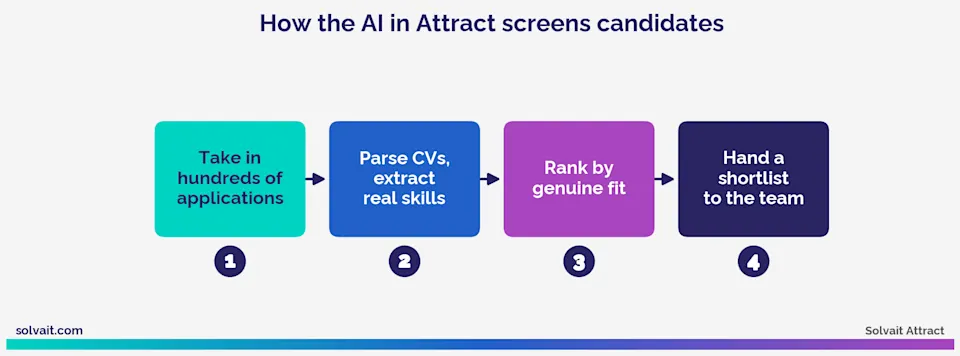
It works in four steps. It takes in the applications, parses each CV to pull out real skills and experience, ranks candidates by genuine fit for the role rather than surface keywords, then hands the team a shortlist. The recruiter starts from the strongest people instead of starting from zero.
The time difference is the whole point. A recruiter spends around 23 hours screening CVs for a single hire, per a widely cited Glassdoor analysis, and the global average time to hire now sits near 44 days (SHRM, 2025). Talent professionals who use generative AI report about a 20% drop in weekly workload, roughly one full workday back every week (LinkedIn Future of Recruiting, 2025). Deloitte puts the potential time to hire reduction as high as 50%.
Here is the same shift, side by side.
Screening step | Manual screening | AI screening in Attract |
Reviewing hundreds of CVs | Days of work | Minutes |
Basis for the shortlist | Keywords and gut feel | Real skill to role match |
Consistency | Varies by reviewer | One standard for every applicant |
What the team does | Sifts the pile | Focuses on the best people |
One honest caveat. AI won't fix a vague job description or a broken interview loop, and speed alone isn't the win. Gartner found in October 2025 that 88% of HR leaders say their organizations have not yet seen significant value from AI tools, usually because the tool got bolted on without changing the process around it. The value shows up when the AI clears the repetitive work and people spend the saved time on better decisions.
Why did Sankyu expand with Solvait instead of switching?
In a market where a new HR system launches every year, staying six years is a signal. It means the platform earned its place quietly, through payroll runs that landed on time and compliance that held up.
That track record is why the expansion into recruitment was a short conversation rather than a fresh procurement. SANKYU already knew the system, the support team, and the roadmap. Adding Attract meant extending something that worked, not gambling on something new.
The timing helps too. Saudi hiring demand is unusually strong right now: 70% of business leaders in the Kingdom plan to grow headcount, well above the 42% global average (PwC 28th CEO Survey, 2025), and AI hiring specifically grew 26% year on year (RemotePass, 2025). Saudi employees are ready for the tools, with 69% already using AI at work (PwC Middle East, 2025). When you plan to hire a lot, in a fast market, screening speed stops being a nice to have.
Where does Solvait fit in?
Solvait Attract is the AI recruitment layer of Solvait's wider platform, built on Microsoft Dynamics 365 and used by 260+ enterprise clients across Saudi Arabia and the GCC. Sankyu's core HR already runs on Solvait AI HR, which is why adding Attract slots in cleanly rather than creating another disconnected tool.
If you're weighing AI for hiring, start small. Try Solvait's AI recruitment tools on one high-volume role and measure the change in time to shortlist. You'll see the effect on the first req.
Want to see Attract screen and rank candidates on your own roles? Book a demo with Solvait.
FAQ
What is Solvait Attract?
Solvait Attract is Solvait's AI recruitment platform, an applicant tracking system that generates job descriptions in Arabic and English, parses and scores CVs, ranks candidates by fit, and manages stage-based communication. It is built on Microsoft Dynamics 365 and is used by enterprises across Saudi Arabia and the GCC.
Does AI recruitment replace recruiters?
No. In Attract, AI handles the repetitive work: reading, parsing, and ranking large volumes of CVs. The hiring decision stays with people. The goal is to give recruiters a faster, more consistent shortlist so they spend their time on candidates, not on sorting.
How much time can AI CV screening save?
Estimates vary by role and volume. Recruiters spend roughly 23 hours screening CVs per hire (Glassdoor), and talent teams using generative AI report about 20% less weekly workload (LinkedIn, 2025). Deloitte estimates AI can cut time to hire by up to 50% for high-volume roles.
How long has Sankyu worked with Solvait?
SANKYU has run its HR operations on Solvait's platform for more than six years. The Attract go live is an expansion of that existing partnership into recruitment, not a new engagement.
Is Solvait Attract available in Arabic?
Yes. Attract generates job descriptions and manages candidate communication in both Arabic and English, which suits Saudi and GCC employers hiring bilingual and Saudized workforces.
References
PwC Middle East, 28th Annual CEO Survey, Saudi Arabia findings, 2025 (backs the 70% headcount-growth figure).
PwC Middle East, Middle East workers lead the world on AI adoption at work, 2025 (backs 69% of Saudi employees using AI at work).
SHRM, Recruitment Is Broken. Automation and Algorithms Can't Fix It, 2025 (backs ~44 day time to hire and the rising cost/time trend).
Gulf News, AI talent is reshaping hiring, pay and career paths across the Gulf, 2026, citing RemotePass 2025 (backs 26% YoY Saudi AI hiring growth).
LinkedIn, Future of Recruiting Report, 2025 (backs ~20% weekly workload reduction for TA teams using generative AI).
Deloitte, Human Capital Trends, 2024 to 2025 (backs the up to 50% time to hire reduction estimate).
Gartner, HR technology survey, October 2025 (backs 88% of HR leaders not yet seeing significant AI value).
Ready to see Solvait in action?
Book a personalized demo and see how Solvait's AI-powered HR platform can transform the way your team works.
Tags
Related Posts
AI CV Screening: How It Ranks Arabic and English CVs
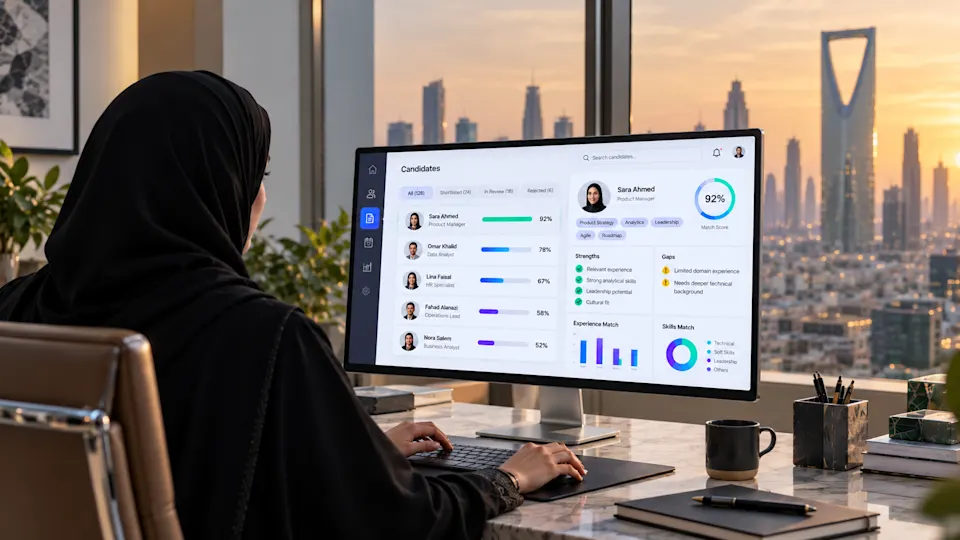
How AI CV screening reads Arabic and English CVs, scores each applicant with strengths and gaps, and what Saudi recruiters should still decide themselves.
Sep 17, 2026

Recruiter Burnout in Saudi Arabia: The AI Fix
Recruiter burnout in Saudi Arabia comes from three busywork drains: screening, chasing candidates, and bilingual writing. Here are how AI removes each.
Sep 23, 2026
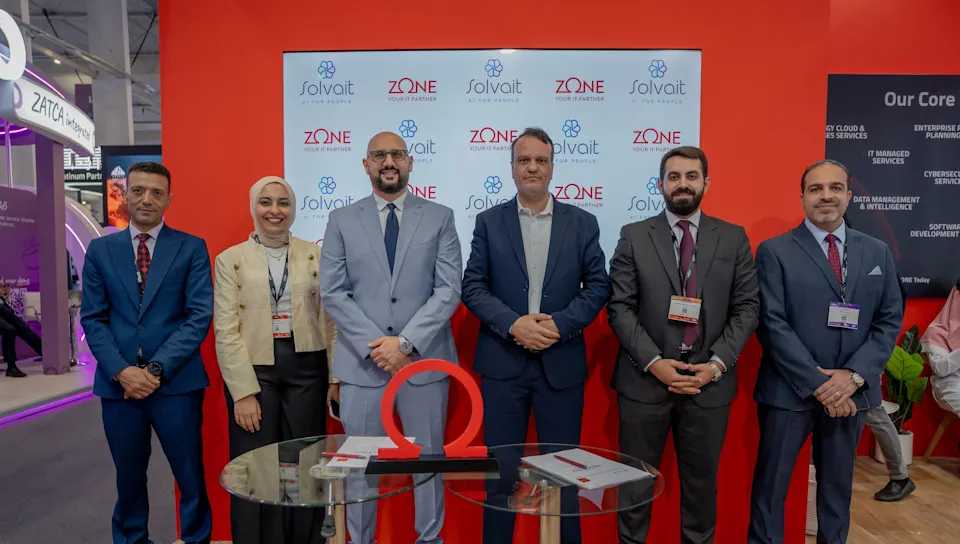
Solvait and ZONE Partner to Expand AI Solutions
Solvait and ZONE sign a strategic partnership uniting an AI native HR platform with proven digital transformation delivery for Saudi enterprises .
Sep 8, 2026