Nestlé Waters Saudi Arabia Chooses Solvait for HCM: Project Kick-off
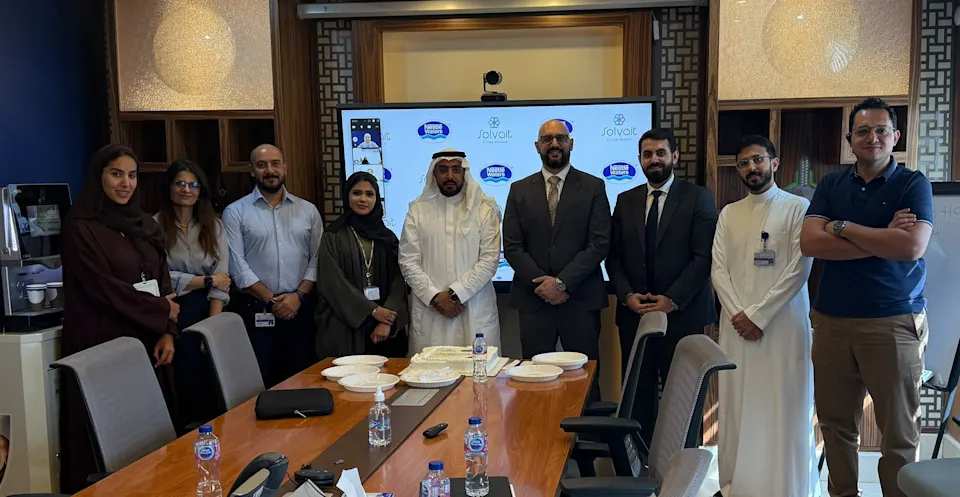
Nestlé Waters Saudi Arabia has chosen Solvait to build a unified human capital management (HCM) platform on Microsoft Dynamics 365, and the implementation project has now kicked off. The project brings HR, payroll, and compliance into one system serving thousands of employees and distribution teams across the Kingdom. A kick-off session set the scope, the delivery team, and the timeline for phase one.
Human capital management is an approach to managing people that connects the full employee lifecycle, from hiring and payroll through performance and development, in a single platform that acts as one trusted source of data and links to government labor systems. That is exactly what the new Nestlé Waters Saudi Arabia project is built to deliver.
Nestlé and Solvait: Launch of HCM Project
Nestlé Waters in Saudi Arabia is part of the largest bottled water producer in the world, running local brands like Al Manhal and Springs alongside the global Nestlé Pure Life. The company operates through factories and distribution hubs in Riyadh, Medina, Jeddah, and the Eastern region. That footprint means a distributed workforce: plant staff, delivery crews, and office roles, all in one payroll.
This kind of workforce is the hardest test any HR system faces. A production line worker, the driver delivering five gallon water bottles, and an office administrator each follow a different shift pattern, attendance rule, and pay calculation. Manage those groups in separate systems or manual spreadsheets and the errors compound while teams lose hours to reconciliation.
The kick-off locked down three things: the phase one scope, the joint delivery team, and the timeline to payroll go live. The rest of this post explains why a customer this size unifies its systems now, and how the project will run.
Why HR digital transformation, and why now?
The Saudi market drove this decision. Compliance in the Kingdom is no longer a set of files reviewed at month end. It is a connected chain across Qiwa, the General Organization for Social Insurance (GOSI), Mudad, and the Wage Protection System. A mismatch between a Qiwa contract, a Mudad salary, and a GOSI subscription can hold up a whole payment run or open a violation.
The numbers explain the urgency. GOSI annuities branch contributions for new hires rose to 9.5% for both employer and employee from July 2025, climbing half a point each year until they reach 11% by 2028, per Saudi labor market coverage. That single annual change turns manual calculation into a recurring liability.
Labor force participation also reached 68.2% in Q1 2025, with Saudi participation climbing to 51.3%, according to the Ministry of Human Resources and Social Development. A labor market expanding and shifting this fast needs systems that update the rules automatically, not teams chasing amendments by hand.
Then there is the workforce itself. More than 70% of the Kingdom's population is under 35, a group that expects mobile self service to book leave and check a payslip, not paper forms routed through a manager.
The table below shows what actually changes when a distributed company moves from fragmented systems to one platform:
Area | Fragmented systems | Unified HCM on Solvait |
Payroll and WPS | Manual monthly reconciliation | Automated, WPS ready calculation |
Mudad, Qiwa, GOSI | A separate login for each | One connected data flow |
Employee self service | Email and paper forms | Mobile self service |
Workforce data | Scattered across spreadsheets | Single source of truth |
Plants and delivery crews | Processed separately by group | Unified categories, different pay rules |
The difference is not only speed. A unified system prevents the error before it happens instead of correcting it after it becomes a violation, and prevention is the only model that scales as the company grows.
How the project will run
The project is built in four phases, from the kick-off session to steady state operation:
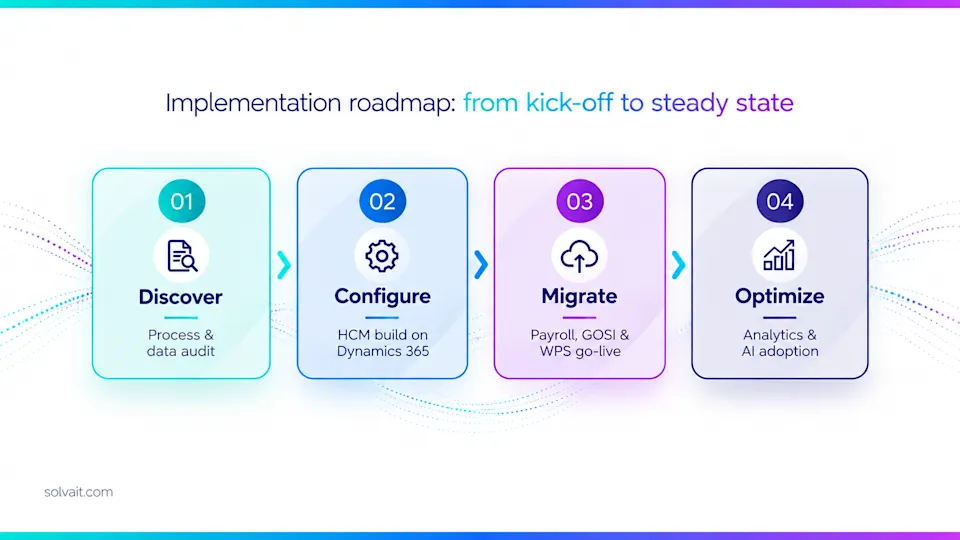
Phase one, Discover: A joint review of current processes, employee data, and workforce categories. This is where the manual reconciliation points get mapped so automation can replace them.
Phase two, Configure: Build the HCM platform on Microsoft Dynamics 365 and tune it to Saudi salary structures: basic, housing allowance, transport allowance, other allowances, with attendance rules per category.
Phase three, Migrate: Payroll go live, GOSI calculation, and Mudad integration for wage file uploads. This is the phase where most HR projects fail, at data migration, so it runs on careful matching and validation before real cutover.
Phase four, Optimize: Once operations are stable, analytics and dashboards switch on and AI adoption begins on the repetitive tasks.
Solvait's HCM platform is built on Microsoft Dynamics 365 and covers core HR, WPS ready payroll, and GOSI, plus employee self service. That is what makes it a fit for a distributed workforce like Nestlé Waters'.
Where does AI come in?
AI in HR is not a slogan in this project. It is a deliberate later phase. Once data is unified in one clean source, the repetitive tasks become automatable: catching payroll errors before approval, tracking Saudization and Nitaqat ratios in real time, and answering the questions employees ask again and again.
Here is the honest part: AI does not fix bad data. If employee categories and pay rules are scattered and inaccurate, automation speeds the error up rather than fixing it. That is why analytics and AI land in phase four, after the foundation settles. Anyone promising AI on day one is selling speed at the expense of accuracy.
For teams that want an AI layer for performance and talent management on top of an existing system, Solvait Wise runs as a standalone platform that strengthens what you already have rather than replacing it.
FAQ
What is human capital management (HCM)?
Human capital management is an approach that connects the full employee lifecycle in one platform: hiring, payroll, performance, and development. It differs from a traditional HR system by treating people as an asset to grow rather than a record to file, and by linking operations to data and analytics.
Why does a large company need to unify its HR systems?
Because Saudi compliance is now a connected chain across Qiwa, GOSI, Mudad, and the Wage Protection System. Separate systems create data mismatches that can hold up a payroll run or open a violation. A unified platform prevents the error before it happens instead of correcting it later.
How long do human capital management projects usually take?
It depends on workforce size and how complex the categories are. Large projects are split into phases: discover, configure, migrate, then optimize. Migration is the most sensitive phase because the quality of the data cutover decides whether go-live succeeds.
Is the Solvait platform compatible with Mudad, GOSI, and WPS?
Yes. Solvait HCM is built on Microsoft Dynamics 365, tuned to Saudi salary structures, calculates GOSI, and integrates with Mudad for wage file uploads, supporting Wage Protection System compliance.
Next step
If you run a distributed workforce and face the same challenge, try Solvait's free salary calculator to estimate pay and deductions under Saudi rules.
To see how a human capital management platform would work in your company, book a Solvait demo.
References
Ministry of Human Resources and Social Development: Progress in the Saudi Labor Market, December 2025 (labor force participation: 68.2% overall, 51.3% Saudi, Q1 2025).
General Authority for Statistics (GASTAT), via SPA: 71% of Saudis under 35, August 2025 (Saudi Family Statistics Report 2024).
General Organization for Social Insurance (GOSI) new Social Insurance Law schedule, reported by CRS: GOSI contribution rate for new employees, July 2025 (annuities rate 9% to 9.5% from July 2025, rising to 11% by 2028).
Ready to see Solvait in action?
Book a personalized demo and see how Solvait's AI-powered HR platform can transform the way your team works.
Tags
Related Posts
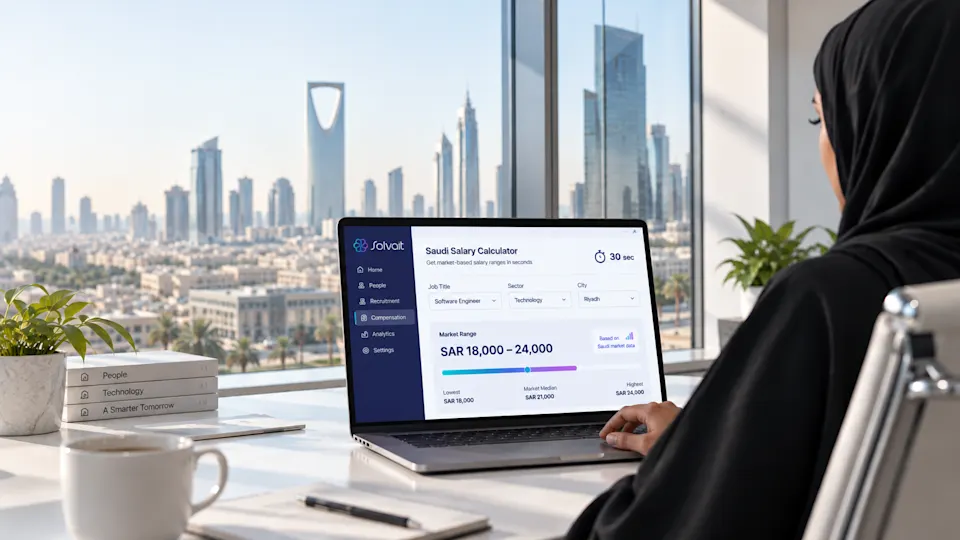
Benchmark Any Saudi Salary in 30 Seconds (Free Tool)
Solvait's free salary calculator gives you the Saudi market range by role, sector and city in 30 seconds. Benchmark any offer before you hire or raise pay.
Sep 13, 2026
Build a Bilingual Arabic English HR Knowledge Base
A step by step guide to building an Arabic English HR knowledge base employees actually use, powered by agentic AI. Built for Saudi HR teams.
Sep 10, 2026
Holding Company Workforce Intelligence in Saudi Arabia
How a Saudi holding company unifies eight subsidiaries into one workforce intelligence view. A practical four layer guide for multi entity groups.
Sep 9, 2026